Hydroponics: The Future of Farming Starts Today
Why Soil-less Agriculture is Transforming the Way the World Grows Food
The way we grow food has remained largely unchanged for thousands of years. Traditional agriculture has fed civilizations, but today it faces unprecedented challenges—climate change, shrinking farmland, water scarcity, unpredictable weather, and a rapidly growing global population. As cities expand and cultivable land decreases, the world is searching for smarter, more sustainable ways to produce fresh, nutritious food.
One of the most promising solutions is hydroponics—a modern farming method that allows plants to grow without soil, using nutrient-rich water instead. Once considered a niche technology, hydroponics is now being adopted worldwide by commercial farms, research institutions, restaurants, schools, and even home gardeners.
At The Home Ponics, we believe hydroponics is not just another farming technique—it’s the future of agriculture.
What is Hydroponics?
Hydroponics is a method of growing plants without soil. Instead of obtaining nutrients from the earth, plants receive a carefully balanced nutrient solution dissolved in water. Their roots are either suspended directly in the nutrient solution or supported by inert growing media such as cocopeat, rockwool, or clay pebbles.
Since nutrients, water, oxygen, and light are supplied in the right proportions, plants can focus their energy on growing instead of searching for nutrients in the soil.
The Food and Agriculture Organization (FAO) describes hydroponics as an efficient cultivation system particularly suited to areas with poor soils, limited land, and challenging climates, while enabling year-round production under controlled environments.
Why Does the World Need Hydroponics?
Agriculture today faces several global challenges:
- Climate change and unpredictable weather
- Rapid urbanization
- Declining fertile land
- Water shortages
- Soil degradation
- Rising food demand
- Increasing labour costs
- Food transportation over long distances
Traditional farming alone cannot solve all these problems.
Hydroponics addresses many of these challenges by producing more food in less space while using significantly fewer natural resources.
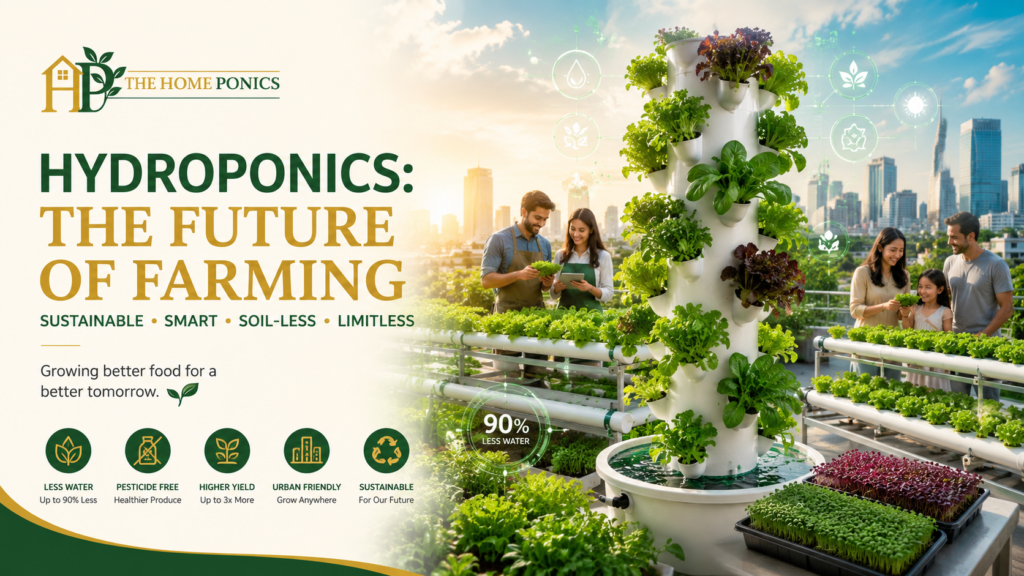
1. Uses Up to 90% Less Water
Water is becoming one of the world’s most precious resources.
Conventional farming loses large amounts of water through runoff, evaporation, and seepage. Hydroponic systems continuously recirculate water, dramatically reducing waste.
According to the FAO, recirculating soilless systems can reduce water use by up to 90% compared with conventional agriculture.
For countries like India, where water scarcity is increasing every year, this is one of hydroponics’ greatest advantages.
2. Grow Anywhere
One of hydroponics’ biggest strengths is that it removes dependence on fertile farmland.
Plants can be grown on:
- Rooftops
- Apartments
- Balconies
- Schools
- Offices
- Restaurants
- Warehouses
- Urban buildings
- Desert regions
- Areas with poor soil
This makes fresh food production possible almost anywhere.
3. Higher Productivity in Less Space
Traditional farming spreads crops horizontally across acres of land.
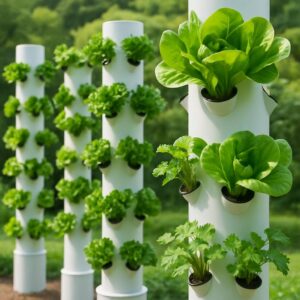
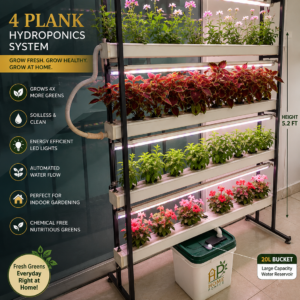
Hydroponics can grow vertically using towers, racks, and NFT systems, allowing significantly more plants within the same footprint.
This higher space efficiency is one reason hydroponics has become central to modern vertical farming and controlled environment agriculture.
4. Faster Plant Growth
Plants grown hydroponically receive an ideal balance of:
- Water
- Oxygen
- Nutrients
- Light
Because roots don’t need to search through soil for nutrients, plants can devote more energy to leaf and fruit development, often leading to faster growth and shorter production cycles for many crops.
5. Cleaner and Safer Produce
Healthy soil can produce excellent food—but soil can also introduce weeds, soil-borne pests, and diseases.
Hydroponics greatly reduces these issues through controlled growing conditions.
The result is cleaner produce with reduced need for pesticides when systems are properly managed.
6. Year-Round Farming
Traditional agriculture depends heavily on seasonal weather.
Hydroponics can operate throughout the year inside greenhouses, shade houses, or controlled indoor environments.
This enables consistent production and more reliable harvests, regardless of monsoons, droughts, or seasonal fluctuations.
7. Perfect for Urban Farming
By 2050, nearly 70% of the world’s population is expected to live in urban areas.
Growing food closer to where people live reduces:
- Transportation
- Food waste
- Carbon emissions
- Supply chain disruptions
Hydroponics makes it practical to produce fresh vegetables within cities using rooftops, balconies, community gardens, schools, and commercial buildings.
8. Technology Meets Agriculture
Modern hydroponic systems combine agriculture with technology.
Sensors can monitor:
- pH
- EC
- Temperature
- Humidity
- Water levels
- Nutrient concentration
Automation and IoT further improve consistency and efficiency, making hydroponics an increasingly data-driven form of agriculture.
Is Hydroponics Replacing Traditional Farming?
No.
Traditional agriculture will always play a vital role in feeding the world.
Hydroponics is best viewed as a complementary solution—especially for high-value vegetables, leafy greens, herbs, and urban food production. It helps address challenges where conventional farming is limited by land, water, or climate.
Why We Believe Hydroponics is the Future
Hydroponics combines sustainability, efficiency, and innovation in a way few farming methods can.
It enables people to:
- Grow fresh vegetables at home
- Start profitable urban farming businesses
- Reduce water consumption
- Produce food throughout the year
- Farm where soil quality is poor
- Bring food production closer to consumers
- Build resilient local food systems
As climate challenges increase and cities continue to grow, hydroponics is likely to become an increasingly important part of global agriculture—not because it replaces every field, but because it solves problems that traditional farming alone cannot.
Start Your Hydroponic Journey with The Home Ponics
At The Home Ponics, our mission is simple:
To help build greener cities, healthier families, and a more sustainable future through modern urban farming.
Whether you’re a homeowner, student, entrepreneur, school, restaurant, or commercial grower, hydroponics opens the door to growing fresh, nutritious food with greater efficiency and less environmental impact.
Ready to experience the future of farming?
Visit The Home Ponics to explore our hydroponic systems, aeroponic towers, premium seeds, microgreen kits, and professional certification programs.